If you own an upper-tier home in Brookline, pricing is rarely as simple as checking a townwide average and adding a premium. This market moves in smaller, more nuanced pockets, and buyers at the top end tend to notice every detail, from location and condition to architecture and timing. In this guide, you’ll learn how to think about pricing an upper-tier Brookline home in a way that reflects today’s market realities and protects your leverage from day one. Let’s dive in.
Why Brookline Pricing Needs Precision
Brookline already starts from a high baseline. The town describes itself as a mature suburban residential community about four miles from downtown Boston, and the Census reports a median owner-occupied home value of $1,246,800 with a median household income of $142,101. Realtor.com’s March 2026 luxury report places the national 90th-percentile luxury threshold at about $1.25 million, which means Brookline’s everyday market is already brushing against luxury territory.
That matters because upper-tier homes in Brookline are not just higher-priced versions of the median home. They often sit in a separate micro-market with a different buyer pool, different competition, and different pacing. If you price an estate-scale or architecturally significant property using blended town stats, you can easily miss the mark.
Brookline Is a Market of Micro-Markets
One of the biggest pricing mistakes is treating Brookline like a single, uniform market. Official town maps show local or state and national historic districts including Chestnut Hill, Cottage Farm, Crowninshield, Harvard Avenue, Lawrence, Olmsted-Richardson, Pill Hill, Wild-Sargent, and Fisher Hill. For an upper-tier seller, that means your most relevant competition may come from only a handful of homes, not the whole town.
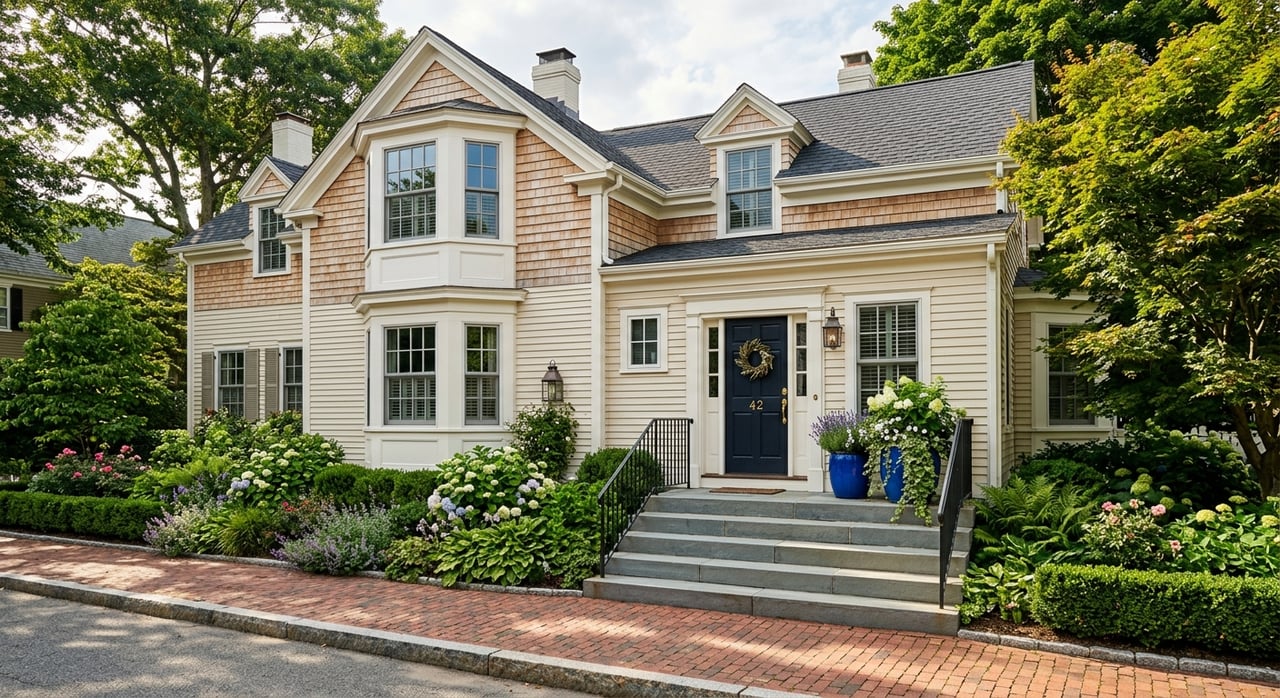
Brookline’s development pattern also shapes value in a very local way. As a historic streetcar suburb, the town includes period homes, preserved streetscapes, and lot-by-lot differences that can influence pricing just as much as square footage. In practice, buyers often compare homes by micro-area, style, renovation level, and overall feel before they compare them by broader town averages.
Historic District Rules Can Affect Pricing
If your home is in a local historic district, pre-listing work may take more time than expected. The Brookline Preservation Commission notes that most exterior modifications and some landscape changes in local historic districts require town review. That can affect what you update, how quickly you can prepare, and when your home is truly ready for market.
This is one reason upper-tier pricing should reflect the home as it will be shown, not as you hope buyers will imagine it after future work. If approvals, repairs, or exterior improvements are still unresolved, buyers may price that uncertainty into their offers.
What Current Brookline Data Shows
Townwide portal data gives useful context, but it should not drive your pricing on its own. Redfin reports Brookline homes selling in about 17 days with about two offers on average, Zillow says homes go pending in about 13 days with a 0.990 sale-to-list ratio, and Realtor.com reports 21 days on market and a 99% sale-to-list ratio in March 2026. Those numbers point to a healthy market, but they also show why one portal snapshot is not enough.
The upper-end single-family segment tells a more specific story. In the MLS PIN Brookline market review, active single-family inventory averaged about $5.0 million as of April 16, 2026, with 5.03 months of supply and 63 days on market. Sold year-to-date single-family homes averaged 84 days on market, 65 days to offer, and 97.21% of original list price.
That slower pace is important. It shows that upper-tier single-family homes are more price-sensitive than the townwide median headlines suggest. It also suggests that buyers in this segment are taking more time and pushing back when a launch price feels aspirational rather than well-supported.
Price Reductions Are Rising
One of the clearest warning signs in the data is the increase in price changes. The same MLS PIN snapshot shows 19 price-changed single-family listings year to date, up from 8 a year earlier. That is a meaningful shift, and it points to a simple lesson: in today’s Brookline upper-tier market, overpricing is more likely to lead to reductions than to a pleasant surprise.
For sellers, this matters because your first pricing decision shapes your entire launch. A home that enters the market too high can lose momentum, sit longer, and invite buyers to question whether future concessions are coming.
What Actually Moves Value at the Top End
At the upper end of the market, pricing is about more than size and address. Realtor.com’s neighborhood snapshot shows notably different listing counts across areas such as Coolidge Corner, Brookline Village, Washington Square, South Brookline, Corey Hill, Aspinwall Hill, and High Street Hill. That means the right comparable set is often narrow and highly specific.
In most cases, your best comp set includes homes that match your property in three key ways:
- Same micro-area
- Same property type and style
- Same renovation and condition level
A renovated period home in one Brookline pocket may draw a very different response than a similarly sized home elsewhere. Even within the same price band, buyer expectations can shift based on architecture, layout, finish quality, and move-in readiness.
Presentation Has Real Pricing Power
Upper-tier Brookline buyers often respond strongly to character and condition. Zillow’s April 2026 Buzz Index found that exposed beams drove a 20% daily boost in buyer engagement, exposed brick 15%, and arched doorways 14%. The same report noted higher interest in Victorian and Tudor homes, both of which align well with parts of Brookline’s housing stock.
Staging and presentation also matter. NAR’s 2025 staging report found that 29% of agents saw staging increase dollar value offered by 1% to 10%, while 49% said it reduced time on market. For a Brookline seller, that supports a strategy where pricing and presentation work together rather than separately.
If your home is truly turnkey, has strong architectural character, and is presented beautifully, you may be able to price with more confidence. If it needs updates, has permit questions, or feels visually unfinished, buyers may discount it more than expected.
Why Assessments Are Not Pricing Tools
Some sellers look first at their tax assessment, but that number has limits. Brookline’s assessor states that market value is estimated from actual sales around the January 1 assessment date using an 18-month sales lookback. That makes assessments useful for tax purposes, but not precise enough for a live upper-tier pricing decision.
The town’s FY2026 residential tax rate is $10.24 per $1,000 of assessed value. As a simple illustration, a $5 million assessed value would imply roughly $51,200 in annual town tax before exemptions. That may help with budgeting, but it should not be confused with what the market will pay today.
Timing Your Brookline Launch
Even in the luxury and upper-tier segment, timing still matters. Redfin says late March through mid-May is generally the best window to list, with late April especially strong. Zillow’s 2026 research also found that homes listed in the last two weeks of May sold for about 1.7% more on average nationwide.
For Brookline sellers with flexibility, that supports a spring launch once the home is fully prepared. In the upper-tier market, it is often better to arrive polished and well-timed than to rush into the market underprepared.
Start Earlier Than You Think
If your property needs repairs, staging, landscaping, photography-ready finish work, or possible historic-district review, a longer runway may be wise. Based on Brookline’s review rules and the slower pace in the upper-tier single-family segment, a 12- to 18-month preparation window can be reasonable for some estate owners.
That does not mean every seller needs that much time. It means the highest-value launches are often planned well in advance, especially when the home’s appeal depends on thoughtful preparation and clean execution.
A Smart Pricing Strategy for Upper-Tier Brookline Homes
The most defensible pricing strategy usually starts with a tight, recent comp set and a realistic view of current buyer behavior. In Brookline’s upper-tier single-family market, a strong list price should invite serious first-week feedback, not test the market with an aspirational number.
A practical strategy often looks like this:
- Review very recent comparable sales in the same pocket.
- Compare only similar property types, styles, and condition levels.
- Account for architectural character, renovation quality, and move-in readiness.
- Consider any historic-district limitations that affect presentation or buyer perception.
- Launch when preparation is complete and timing supports visibility.
- Watch first-week feedback closely and adjust only if the market clearly tells you to.
This approach helps you protect the strongest part of your listing cycle, which is the moment your home first reaches the market. In a segment where reductions are rising and buyers are selective, that early positioning matters.
Why Senior-Level Guidance Matters
Pricing an upper-tier Brookline home is part analysis and part judgment. The data helps, but the final strategy also depends on knowing Brookline’s pocket markets, understanding how presentation changes buyer behavior, and managing the many moving parts that shape a launch.
That is where a high-touch, full-service approach can make a difference. With the right preparation, staging support, vendor coordination, and tailored marketing, your price can be backed by a story the market understands and values.
If you’re considering a sale and want a measured, evidence-based pricing strategy for your Brookline home, connect with Debby Belt for senior-level guidance tailored to your property and timing.
FAQs
How should you price an upper-tier home in Brookline, MA?
- Start with very recent comparable sales in the same Brookline micro-area, then adjust for property type, architectural style, condition, and move-in readiness rather than relying on townwide averages.
Why do Brookline, MA luxury homes need hyper-local comps?
- Brookline has distinct pockets and historic districts, so upper-tier buyers often compare homes within a narrow area and style category instead of treating the town as one uniform market.
Are Brookline, MA tax assessments useful for setting list price?
- They are useful for understanding taxes, but not for setting an accurate live market price because Brookline assessments use sales around the January 1 assessment date with an 18-month lookback.
When is the best time to list an upper-tier home in Brookline, MA?
- Late March through mid-May is generally a favorable listing window, with late April looking especially strong if your home is fully prepared.
Do historic district rules affect selling a Brookline, MA home?
- Yes. In Brookline local historic districts, many exterior changes and some landscape changes require town review, which can affect pre-listing timelines and preparation decisions.
What happens if you overprice a Brookline, MA upper-tier home?
- Current MLS PIN data suggests overpricing is more likely to lead to price reductions and a longer market time than to attract stronger offers.