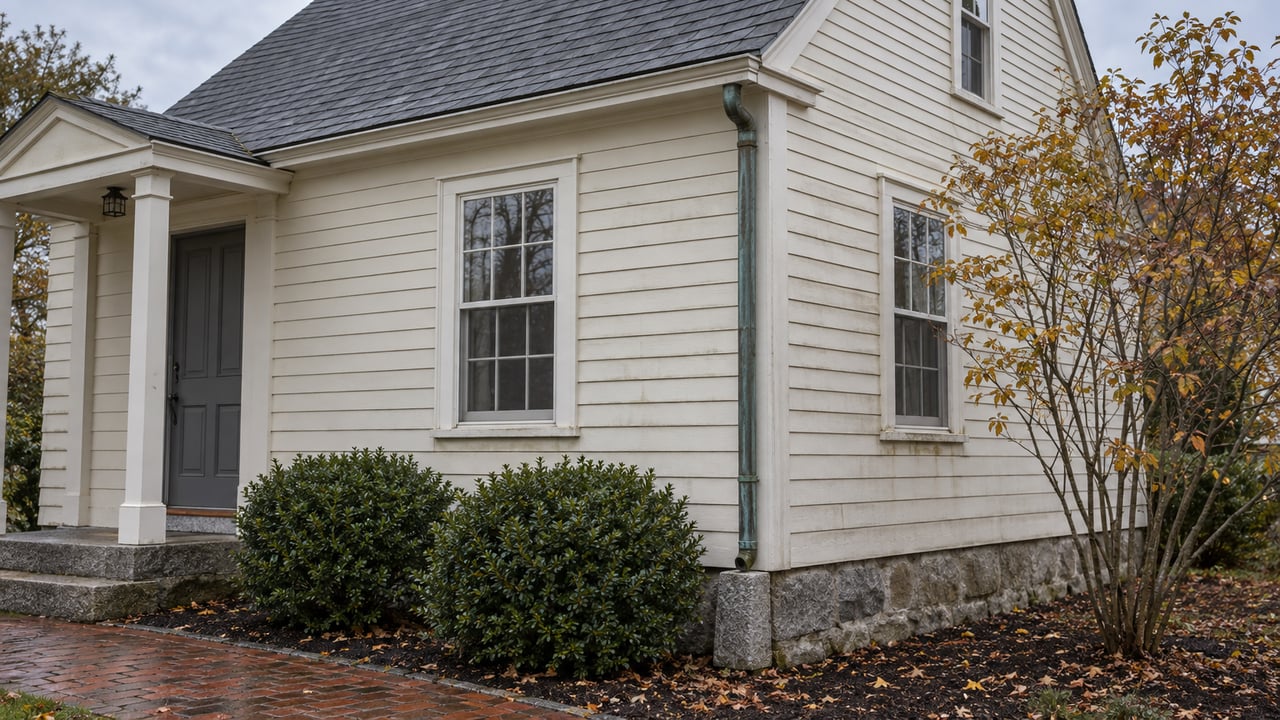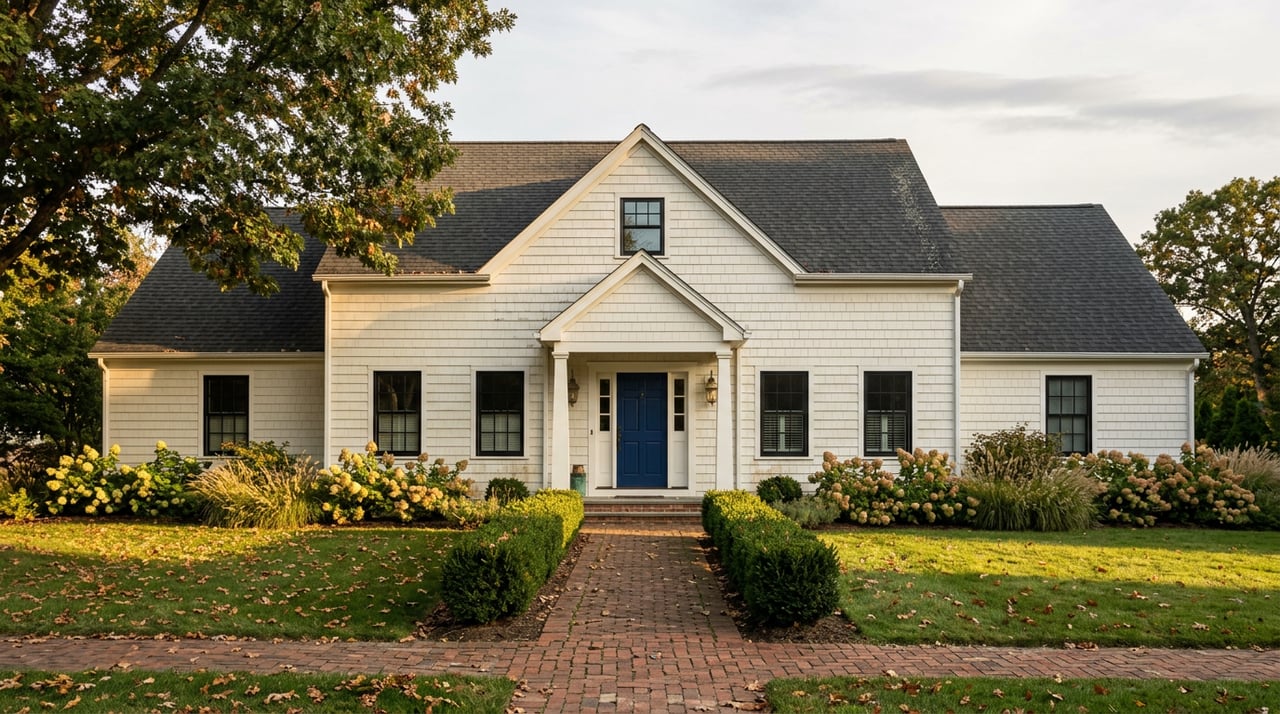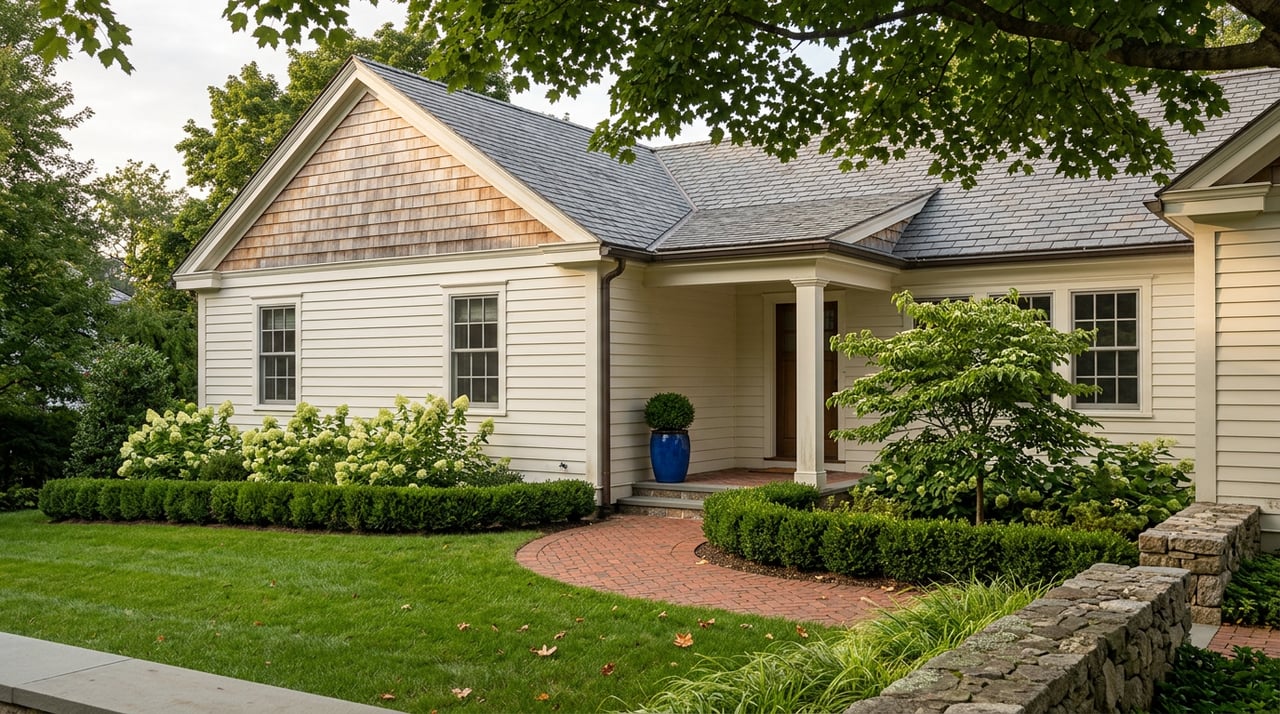
The Town of Brookline gives Chestnut Hill homeowners a specific instruction for registering a car: do not list Chestnut Hill as the place of garaging. Its assessor's FAQ explains that Chestnut Hill is a post office address covering parts of Boston, Newton and Brookline. The FAQ also lists 02467 among Brookline's own ZIP codes. The town is protecting its excise bills, and the same fact matters to a buyer. Two listings that both read "Chestnut Hill, MA 02467" can be taxed by different governments, with different rates, different exemptions and different closing paperwork.
The usual way to compare them is to line up the three tax rates and pick the lowest one. For a household that plans to live in the home, that method often gives the wrong answer.
Three rates, one postal address
On the map, the split is easy to miss. Hammond Pond sits in Newton, inside the Webster Conservation Area, and you can reach it from the Mall at Chestnut Hill. The Chestnut Hill Reservoir sits on the line between Boston and Brookline. Brookline's Chestnut Hill North historic district study draws its district between the Green Line and Boylston Street, from Reservoir Road to Dunster Road. Boston College describes its main Chestnut Hill campus as being in Newton.
Each of those municipalities set its own fiscal 2026 residential tax rate:
- Newton: $9.69 per $1,000 of assessed value
- Brookline: $10.24 per $1,000
- Boston: $12.40 per $1,000
Looking only at those numbers, Newton wins every time and Boston costs the most. A $2 million assessment works out to $19,380 a year in Newton, $20,480 in Brookline and $24,800 in Boston. That ordering is correct for one kind of owner: someone who will not live in the house.
The flat deduction that reorders the bills
Brookline and Boston both offer a residential exemption to owner-occupants. Newton has no general version.
Brookline's Select Board kept its exemption at 20% for fiscal 2026. An eligible owner-occupant has $354,974 subtracted from the assessed value before the tax is calculated. At Brookline's rate, that saves roughly $3,635 a year. Boston's fiscal 2026 residential exemption took $4,353.74 off a qualifying owner's bill. Newton's current list of tax assistance covers targeted programs, such as a $2,000 exemption for qualifying older residents, and has no broad exemption for owner-occupants.
Both exemptions stay the same in dollars no matter what the house is worth, while the rates rise with value. That one feature drives everything that follows. Here are the fiscal 2026 numbers for an owner-occupant, before the Community Preservation Act surcharge and any personal exemptions:
| Assessed value | Newton | Brookline, owner-occupied | Boston, owner-occupied |
|---|---|---|---|
| $1,000,000 | $9,690 | $6,605 | $8,046 |
| $1,500,000 | $14,535 | $11,725 | $14,246 |
| $2,000,000 | $19,380 | $16,845 | $20,446 |
| $3,000,000 | $29,070 | $27,085 | $32,846 |
At $1 million, Newton has the highest bill of the three. At $2 million, Brookline is about $2,500 a year below Newton, and Boston has moved just above it. Newton's low rate gains ground as the value rises, but against Brookline it needs far more value to catch up than most buyers will spend.
For a reference point, Brookline's fiscal 2026 classification presentation listed 4,579 single-family parcels with an average value of $2,844,212. An owner-occupied house at that value would owe about $25,490 in Brookline and about $27,560 at Newton's rate.
Where the lines cross
Because both exemptions are fixed amounts, you can work out the exact value where each comparison flips. Using the fiscal 2026 figures:
- Boston versus Newton: Boston's rate is $2.71 higher per $1,000. Its $4,353.74 exemption covers that gap up to an assessed value of roughly $1.6 million. Below that, an owner-occupant pays less on the Boston side. Above it, Newton is cheaper, and the gap grows by $2.71 for every additional $1,000 of value.
- Brookline versus Newton: Brookline's rate is only $0.55 higher per $1,000. Its roughly $3,635 exemption covers that gap up to about $6.6 million in assessed value. Across nearly every single-family price point in Chestnut Hill, an owner-occupant pays less in Brookline than in Newton.
- Investors, second-home buyers and anyone who won't live in the house: with no exemption, the rates alone decide it. Newton is lowest, then Brookline, then Boston, at every value.
The same house can therefore rank first or last depending on who owns it. A family moving into a $2 million Brookline home and an investor buying the same property for rent will see bills about $3,635 apart, even though the assessment, the rate and the street address are identical.
Why Newton's bill has no exemption line
Newton has looked at the idea. On August 13, 2024, Chief Assessor Edward O'Neil presented a residential exemption discussion to the City Council's Finance Subcommittee. His deck described the exemption as a shift within the residential class, moving tax burden away from moderately valued owner-occupied homes and toward higher-valued homes, second homes and non-owner-occupied properties. It proposed a planning phase to check owner-occupancy data before deciding anything, and named fiscal 2026 as one possible start year.
When fiscal 2026 arrived, the Council's November 17, 2025 hearing voted only on the residential factor, which splits the levy between homes and the commercial, industrial and personal property classes. The Council adopted the maximum shift of about 175% onto those classes by a 21–1 vote. That produced the $9.69 residential rate. During public comment, resident Alex Jablon urged the maximum shift to help the city "keep its tax system progressive."
In practice, Newton's approach lowers the rate for every residential owner, while Brookline and Boston also give a fixed break to whoever lives in the home. Brookline's own officials have noted where that formula falls short. At the November 2025 hearing, Select Board member John VanScoyoc said the approach "does nothing to help the person who happens to be sitting on a high-value home that they've owned for decades and now finds themselves paying $20,000 or $30,000 a year in taxes." His point fits the table above: the higher the value, the less the flat exemption matters and the more the rate decides the bill.
The Boston side has a deadline this month
The exemption only counts if it shows up on the bill, and Boston's timing catches people. Its fiscal 2027 flyer says owners who occupied the property as their principal residence on January 1, 2026 may qualify. In some cases, so may buyers who took ownership between January 1 and June 30, 2026. The city recommends filing by mid-October to get the credit on the third-quarter bill, and allows applications until April 1, 2027 if the credit does not appear. If you bought on the Boston side of Chestnut Hill this spring, the next two weeks matter.
The closing process also differs by municipality:
- Smoke and carbon monoxide certificates in Boston: Boston Fire asks sellers to apply through its portal once the purchase and sale agreement is signed. It requires at least 10 business days of notice to schedule and warns that the inspection may not happen before closing.
- Smoke detector inspections in Newton: Newton Fire reports residential inspections booking about two weeks out and advises scheduling a sale inspection one month before closing.
- Water and sewer in Boston: the Boston Water and Sewer Commission requires a final meter reading and a lien certificate at closing. The certificate costs $25 for a one-family home, and the application should arrive at least 10 working days before closing.
- The CPA surcharge: Newton charges homeowners 1% of their annual real estate tax. Boston also charges 1%, but first deducts $100,000 from the assessed value and applies the residential exemption, so owner-occupants on that side pay a much smaller surcharge.
When these numbers change
Every figure here is from fiscal 2026. The fiscal 2027 rates will be set in late fall. Newton sets its rate in November of each year. As of August 21, 2026, Brookline's classification hearing had not been scheduled. Boston sends third-quarter bills at the actual rate in late December. The crossover points will move with the new rates and exemption amounts. The way they work will not, unless one of the three changes its exemption policy.
Questions buyers ask
How do I confirm which municipality taxes a Chestnut Hill property? Ask the assessor in each of the three municipalities. Brookline's own guidance says the Chestnut Hill name covers parts of all three, so the mailing address cannot settle it.
Does the exemption apply to condos? The exemption is tied to owner-occupancy, not property type. Newton's 2024 assessor presentation listed single-family homes, condos and two- and three-family properties among the property types that qualify under the state's exemption option. Check eligibility details with the Brookline or Boston assessor directly.
Is this tax advice? No. It is arithmetic based on published fiscal 2026 figures. Your actual bill depends on your assessment, your eligibility for exemptions and the coming fiscal 2027 rates, so confirm with the assessor and your own tax advisor.
When we compare Chestnut Hill homes for a client, the yearly carrying cost goes into the analysis next to the price, because the same address can come with three very different tax bills. If you are weighing homes on more than one side of the town lines, or preparing to sell and want to know how a buyer will read your tax bill, Debby Belt can run those numbers with you property by property. Request a home value review and we will include the tax picture for your specific address.