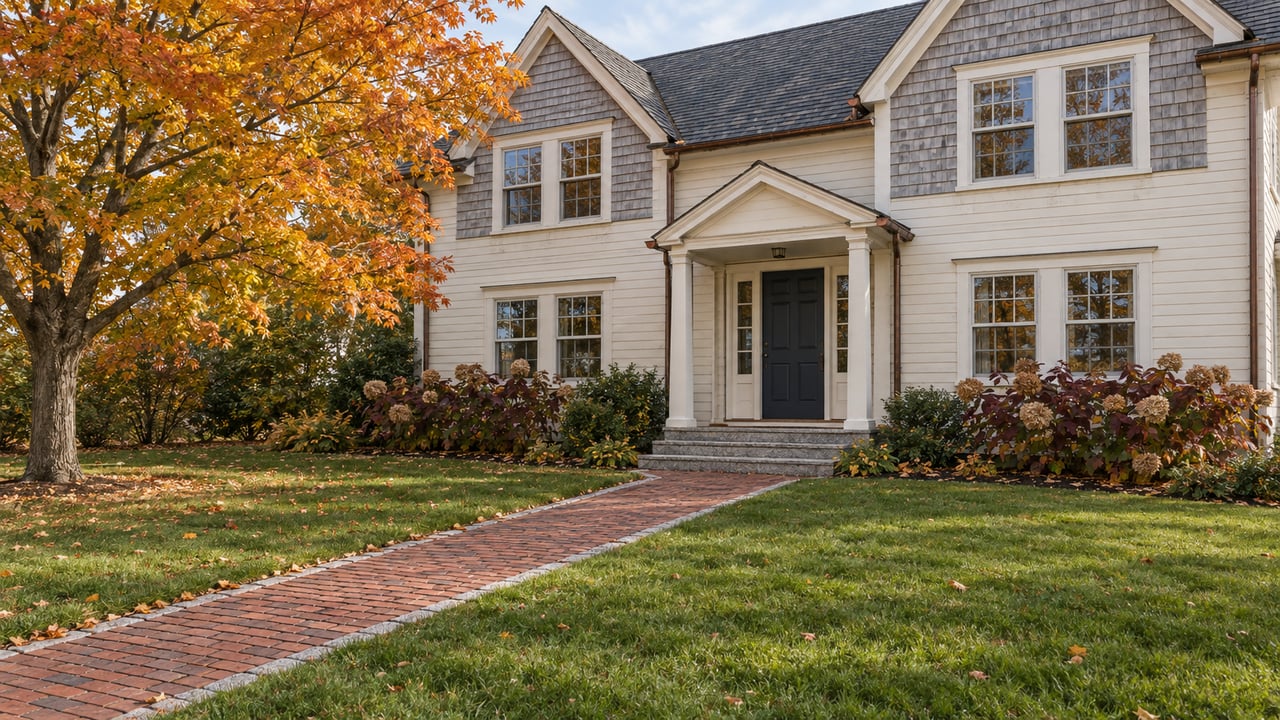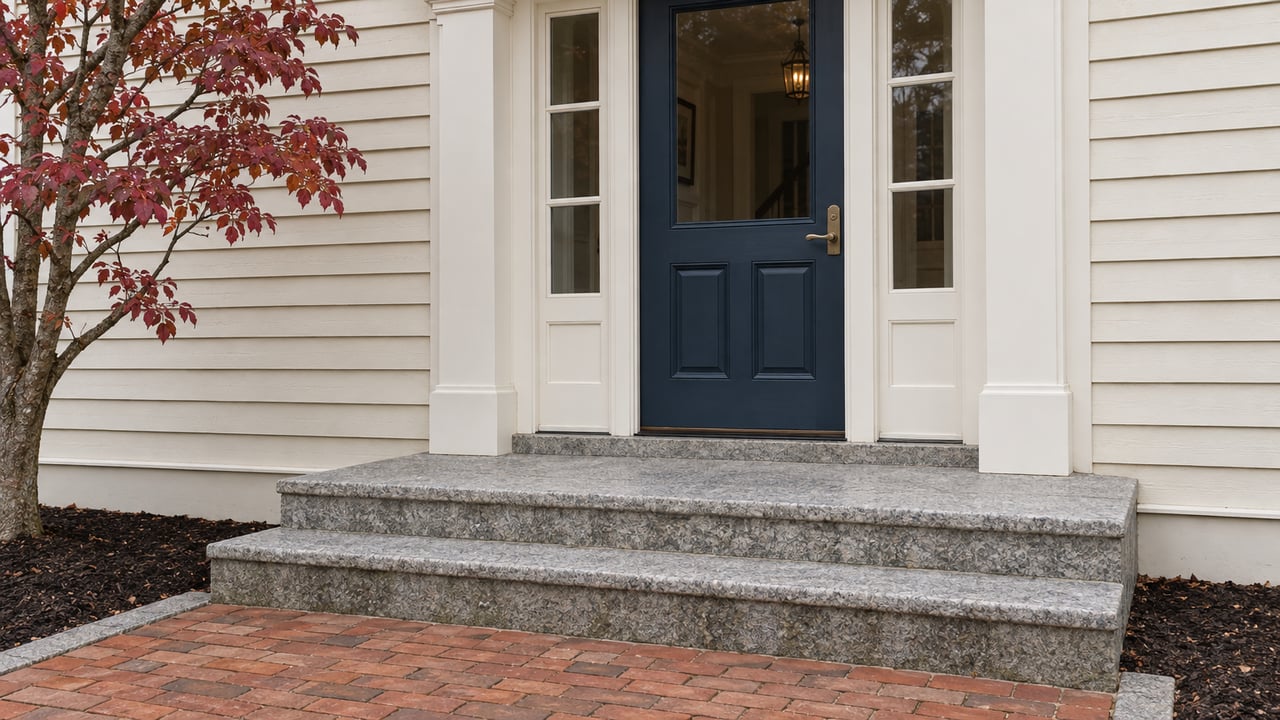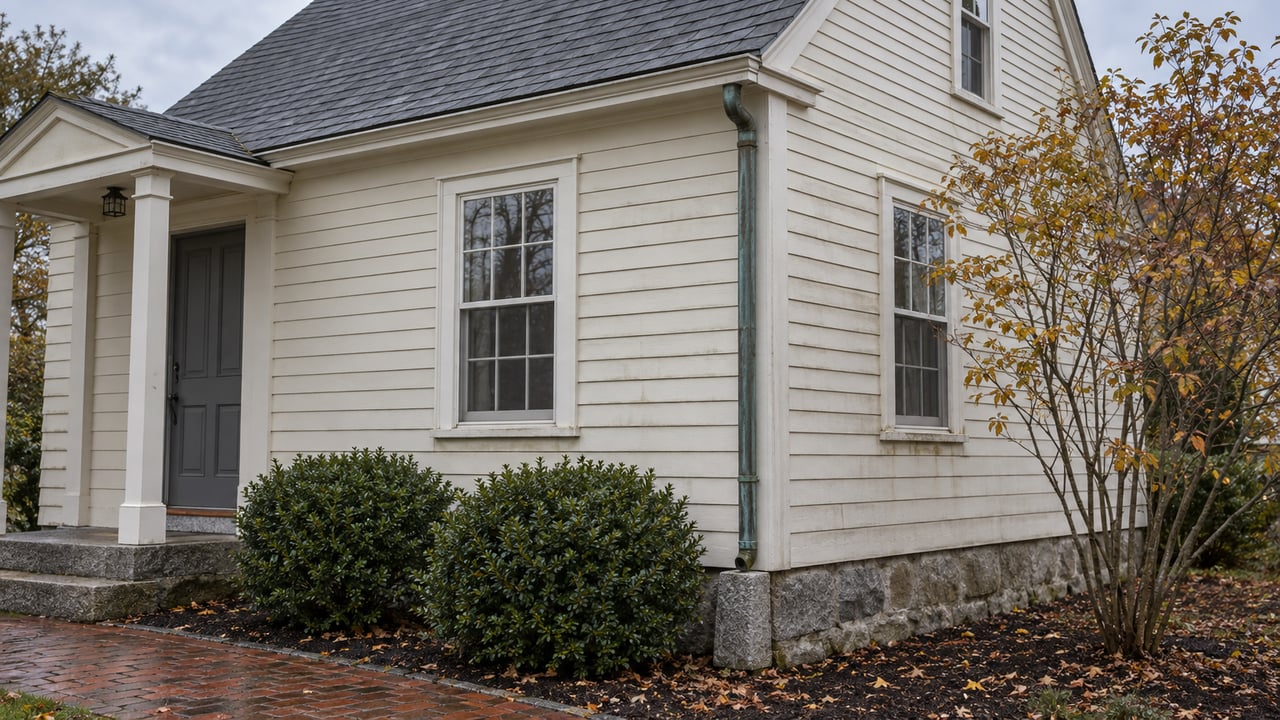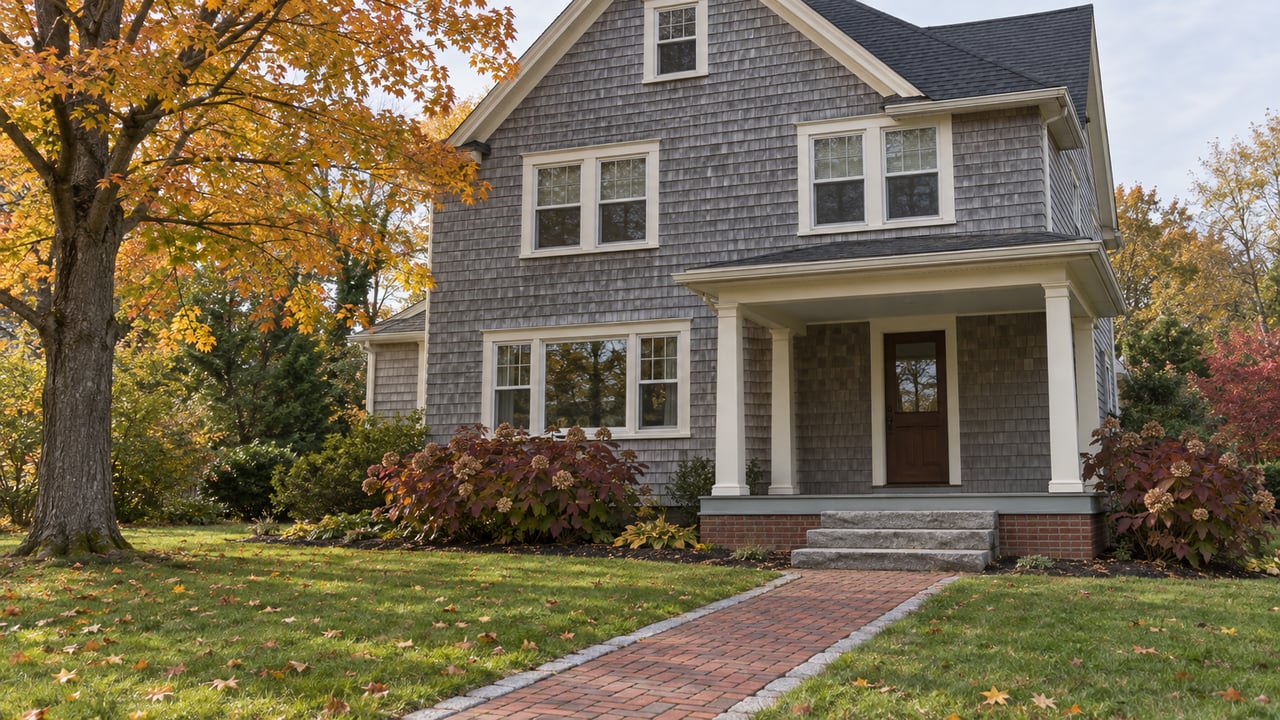
When Newton passed its Village Center Overlay District on December 4, 2023, the argument centered on height and density in the commercial cores. Nearly three years later, much of the actual building around Newton Highlands is happening on the residential edge of the village. The work is on Lake Avenue and on Hartford, Floral and Hyde Streets, mostly in houses that already stand.
This matters to a buyer comparing villages. An older, larger house on those streets can now go to a buyer who plans to make it three to six homes, and that path does not run through a City Council vote. The lot next to the house you are touring can change the same way.
A c.1917 house on Floral Street, and a hearing with no public comment
On August 28, 2025, the Newton Historical Commission considered a request to fully demolish the house and garage at 75 Floral Street. City staff described it as a c.1917 house, well preserved and in a well-preserved area. Staff recommended finding the house "preferably preserved," but not the garages. The applicant described the house's condition and the garage's limited use. The minutes record no public comment. The motion to preferably preserve the house failed 0–5.
The City's VCOD tracker now lists 75 Floral as a four-unit project in the Multi-Residence Transit zone. It is by-right and under construction.
For a buyer, the hearing shows how little process stands between a single house and a small multi-unit building in this zone. The Historical Commission reviews the demolition. The new building itself is allowed by right.
The addresses in the Highlands cluster
The City's tracker lists 20 projects citywide, totaling 163 units, with a last update of "August 13th." Seven of those addresses sit on the streets around the Highlands station. All seven are in Ward 6 and the MRT zone.
| Address | Units | Adaptive reuse | Status, per City tracker |
|---|---|---|---|
| 312 Lake Ave | 6 | Yes | Under construction |
| 331–333 Lake Ave | 6 | Yes | Under construction |
| 40 Hartford St | 6 | Yes | Building permit review |
| 50 Hartford St | 6 | Yes | Building permit review |
| 75 Floral St | 4 | No | Under construction |
| 6–10 Floral St | 3 | No | Under construction |
| 121–125 Hyde St | 3 | No | Under construction |
Together these come to 34 of the 163 project units the tracker lists citywide. Two caveats apply. First, the tracker counts total units in each building, which is not the same as new homes added. The Newton Beacon reported 6–10 Floral as two net new units and 121–125 Hyde as three. Second, the tracker does not print a year with its update date, so each status is only as current as the City's latest refresh.
The four six-unit projects on Lake Avenue and Hartford Street are adaptive reuse. That means the existing house stays and gets divided rather than torn down. A City Development Review Team snapshot dated May 26, 2025 already showed 312 Lake and 50 Hartford as six-unit MRT adaptive-reuse proposals. These projects have been visible for more than a year.
Why the change landed on the outer ring rather than the square
The overlay has three tiers. As Fig City News reported from a February 9, 2026 Zoning and Planning Committee meeting, the MRT tier covers the outer edges of village centers. New MRT buildings are capped at a 1,500-square-foot ground footprint and two and a half stories, or 40 feet with a pitched roof. They must be set back at least 20 feet. Nora Masler Colello, the City's chief of long-range planning, said many MRT rules are designed to encourage preservation and allow up to six units per building.
The denser tiers allow much more on paper. VC3 allows a 15,000-square-foot footprint and has an affordability bonus. Even so, Amy Dain of Boston Indicators found that most of Newton's VCOD activity has been in MRT, according to the Newton Beacon's coverage of her March 2026 presentation. She counted about 15 small and medium projects, most of them preserving and adapting existing homes, adding up to fewer than 100 net new units. Larger 4.5-story buildings "have not caught on as much."
"Small-scale projects have to happen on a lot of parcels to add up," Dain said. "That's one of the central lessons of the study."
The same report notes that before the rezoning, every multifamily project of any size needed City Council approval. Former Councilor Deb Crossley told Fig City News that zoning which limits many properties to two-story buildings makes new construction financially difficult. MRT gives an older house on the village fringe a by-right route to more homes within a footprint that resembles the house already there. That is where Highlands owners and builders have used it.
On the commercial side of the Highlands, the overlay has been used for something smaller still. The Rox Diner property at 2–8 Hartford Street opted into VC2 so it could add seating without a parking waiver. The City reported a certificate of occupancy with no exterior work.
The large single-family rebuild got harder in the same period
A second rule pushes the same way. In October 2025, the City Council approved the Residential Facade Build Out Ratio, according to The Heights' reporting carried by the Newton Beacon. It limits the front width of many new single-family homes to 60 percent of the lot's frontage within required setbacks. Lots narrower than 50 feet are exempt, as are additions under one and a half stories. Going past the limit requires a special permit. The rule took effect March 1, 2026. Councilor Susan Albright said she plans to docket a review by March 2027 to see whether it reduces teardowns.
Put the two rules side by side, and the picture for an older house in the Highlands MRT ring looks like this. Replacing it with a much wider single-family home now runs into a frontage cap. Keeping it and dividing it into as many as six units is allowed by right. For a seller, that means a wider pool of possible buyers. For a buyer, it means one more kind of competitor for the house, and a neighbor who may follow the same playbook.
What a buyer checks on these streets
These are the checks we run before an offer on a house near the Highlands village edge:
- Find the parcel and its neighbors on the VCOD map. MRT, VC2 and VC3 each allow different things. The house itself may be outside the overlay while the lot behind it is inside.
- Read the City's VCOD tracker for nearby addresses. "Building permit review" on Hartford Street and "under construction" on Lake Avenue point to very different timelines for construction next door.
- Look for Historical Commission demolition items on the street. The 75 Floral hearing is a public record and shows what the commission weighed.
- Know that by-right means no special permit hearing. MRT projects are allowed by right, and site plan review applies to some, especially adaptive reuse.
- Compare unit counts carefully. A six-unit conversion of an existing two-family adds four homes to the street, not six.
The petition that could widen the ring
The rules may not stay where they are. On September 28, 2026, the Newton Beacon reported on a citizen petition from the housing group Newton for Everyone. It would allow up to four units on lots where current zoning allows two, permit residential buildings up to five stories in existing business districts, and allow multifamily housing by right in manufacturing districts. Under the City Charter, a petition with 50 or more registered-voter signatures requires the Council to hold a hearing and vote within three months. The Beacon noted that if the petition is presented this fall and voted on after the new year, it could become a focal point of next year's local elections.
Separately, Fig City News reported in December 2025 that the Zoning and Planning Committee had identified possible VCOD cleanup amendments that could be docketed in the new term. These included more flexibility in where units can go in adaptive-reuse projects and changes to parking setbacks. The reporting reviewed for this post does not show where those items stand now.
Questions buyers ask
Does the overlay require anyone to build? No. The City states that property owners may build under either the existing zoning or the VCOD, and that the overlay expands rights without requiring new buildings.
How much new housing has the overlay produced citywide? Dain's analysis, reported in March 2026, counted about 15 projects and fewer than 100 net new units, out of roughly 33,000 homes in Newton.
Are the Lake Avenue and Hartford Street projects condos or rentals? The City tracker and the local reporting reviewed for this post don't say. The answer will depend on each owner's plans.
If you're weighing a house on one of these streets, or thinking about what the overlay means for a house you already own near the Highlands station, Debby Belt can go through the map, the tracker and the nearby filings with you before you set a price or make an offer.
This article is general information, not legal, tax or financial advice. Consult a qualified professional about your situation.